Guide to Leaky Gut Signs, Symptoms, & Solutions

What is leaky gut? This comprehensive guide shares leaky gut signs, symptoms, & solutions for healing your gut & restoring health to your digestive system…
- Leaky gut (intestinal permeability) occurs when the tight junctions in your gut lining break down, allowing toxins, undigested food particles, and bacteria to enter your bloodstream.
- Symptoms go far beyond digestion — brain fog, skin conditions, mood swings, joint pain, and autoimmune flares are all common signs of a compromised gut barrier.
- Gluten triggers the release of zonulin, a protein that directly breaks apart the tight junctions in your intestinal lining — making diet one of the most powerful levers for healing.
- Most people have leaky gut for years before connecting their symptoms to gut health — knowing what to look for changes everything.
- The 4R approach (Remove, Replace, Reinoculate, Repair) is one of the most effective natural frameworks for restoring a damaged gut lining.
Your gut is making you sick in ways you probably haven’t connected yet.
The symptoms of leaky gut are notoriously easy to misattribute — fatigue gets blamed on stress, skin breakouts on hormones, brain fog on poor sleep. But when these issues cluster together without a clear cause, your gut barrier is often the common thread. Understanding what’s actually happening inside your intestinal lining is the first step toward real, lasting relief.
Your Gut Is Making You Sick — Here’s What’s Really Happening
Most people think of gut health in terms of digestion alone — bloating after meals, occasional stomach cramps, maybe some irregularity. But your gut is doing something far more complex than processing food. It’s acting as a sophisticated security system, deciding what gets absorbed into your bloodstream and what gets kept out.
What Leaky Gut Actually Means
The term “leaky gut” refers to a condition called intestinal permeability — a breakdown in the structural integrity of your gut lining. Your intestinal wall is lined with cells held together by structures called tight junctions. Under healthy conditions, these junctions act like a well-guarded gate, allowing nutrients through while blocking harmful substances.
When those tight junctions are damaged or loosened, the gate breaks down. Undigested food particles, bacterial toxins (called lipopolysaccharides or LPS), and pathogens can now pass directly into your bloodstream. Your immune system, encountering these foreign invaders, launches an inflammatory response — and that inflammation can show up anywhere in the body.
Harvard Health has noted that while a leaky gut lining is a distinct physiological finding, intestinal permeability as a contributing factor to systemic disease is an area of serious and growing clinical interest. The distinction matters: having a compromised gut lining is one thing, but the downstream effects are what make it a whole-body problem.
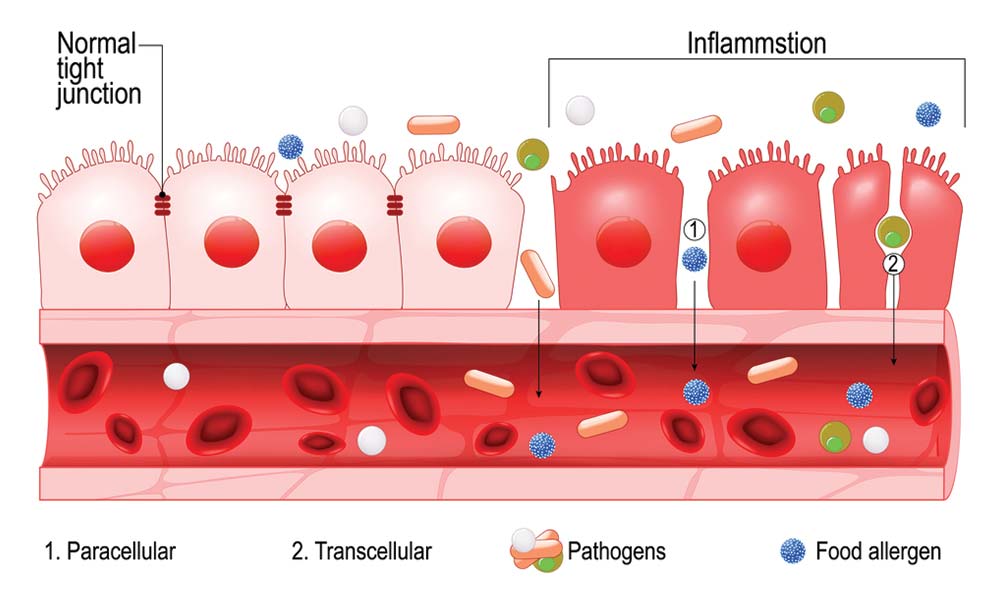
Image from www.gastrosav.com.
How Intestinal Permeability Triggers Whole-Body Symptoms
Once the gut barrier is breached, your immune system goes into a state of chronic low-grade inflammation. This isn’t the acute inflammation you feel after an injury — it’s a slow, persistent immune activation that quietly drives dysfunction across multiple systems.
- The brain is affected through the gut-brain axis, leading to mood changes, anxiety, and cognitive fog
- The skin responds to internal inflammation with eczema, acne, and rosacea flares
- The immune system becomes dysregulated, increasing the risk of autoimmune conditions
- The joints experience inflammatory pain that feels unexplained or migratory
- The endocrine system is disrupted, contributing to hormonal imbalances and fatigue
This is why leaky gut is so frequently missed — its fingerprints appear in seemingly unrelated places, and most conventional approaches treat each symptom in isolation rather than addressing the gut as the root cause.
Why So Many People Have Leaky Gut Without Knowing It
Modern life is practically a recipe for intestinal permeability. Processed foods, chronic stress, antibiotic overuse, alcohol, and environmental toxins are all established contributors to gut barrier breakdown. The cumulative effect of these factors — not any single cause — is what most people are dealing with.
Millions of people live with leaky gut symptoms for years, cycling through diagnoses that treat the surface without ever addressing the gut. The bloating gets labeled as IBS. The fatigue gets called burnout. The skin issues get treated with topical creams. Until gut health is addressed directly, the cycle continues.
9 Leaky Gut Symptoms You Should Not Ignore
These symptoms range from obviously digestive to surprisingly systemic. If several of these sound familiar, your gut barrier deserves a closer look.
1. Chronic Bloating, Gas, and Digestive Discomfort
This is often the first and most obvious sign. When the gut lining is compromised, digestion becomes inefficient — food ferments longer in the intestines, bacteria imbalances develop, and gas production increases. The bloating associated with leaky gut tends to be persistent rather than occasional, and often worsens after meals containing gluten, dairy, or processed ingredients.
Abdominal pain and irregular bowel movements frequently accompany the bloating. These aren’t just inconvenient — they’re your gut’s way of signaling that the environment inside your intestines has become hostile to normal function.
2. Food Sensitivities and Intolerances
When undigested food particles leak through the gut wall, the immune system tags them as threats. Over time, eating those same foods repeatedly trains the immune system to react — creating food sensitivities that can seem to multiply without explanation. Many people with leaky gut find themselves reacting to foods they once tolerated without any issue.
3. Brain Fog and Poor Concentration
The gut-brain axis is a two-way communication highway, and when gut inflammation is high, cognitive function takes a direct hit. Brain fog — that frustrating inability to think clearly, retain information, or stay focused — is one of the most commonly reported non-digestive symptoms of intestinal permeability. The inflammatory molecules released by a leaky gut can cross the blood-brain barrier and interfere with neurotransmitter production.
4. Skin Problems Like Eczema, Acne, and Rosacea
Your skin is a reflection of your internal environment. When toxins that should be filtered by the gut end up in the bloodstream, the body often attempts to eliminate them through the skin — triggering inflammatory skin conditions. Eczema, cystic acne, psoriasis, and rosacea have all been linked to gut dysbiosis and intestinal permeability.
5. Fatigue That Won’t Go Away
Chronic fatigue in the context of leaky gut isn’t about needing more sleep — it’s about nutrient malabsorption and systemic inflammation draining your body’s resources. When your gut lining is damaged, even a nutrient-rich diet may not translate into adequate absorption of iron, B12, magnesium, and other energy-critical nutrients.
The constant immune activation required to manage a leaky gut also consumes enormous amounts of energy. Your body is essentially fighting an internal battle 24 hours a day, leaving little in reserve for normal daily function.
6. Mood Swings, Anxiety, and Depression
Approximately 90% of serotonin — the neurotransmitter most associated with mood stability — is produced in the gut. When gut health is compromised, serotonin production drops, and mood dysregulation follows. This isn’t a minor association. People with intestinal permeability consistently report higher rates of anxiety and depression that improve significantly when gut health is restored.
The gut microbiome also plays a direct role in regulating the stress response via the hypothalamic-pituitary-adrenal (HPA) axis. A disrupted microbiome means a disrupted stress response — creating a feedback loop where stress worsens the gut and the gut amplifies stress.
7. Autoimmune Conditions
The connection between leaky gut and autoimmune disease is one of the most significant findings in gut health research. When the immune system is chronically exposed to particles that have leaked through the gut wall, it can begin to lose its ability to distinguish between foreign invaders and the body’s own tissue. This molecular mimicry is considered a key mechanism in the development of autoimmune conditions including Hashimoto’s thyroiditis, rheumatoid arthritis, lupus, and celiac disease.
Healing the gut barrier does not guarantee the reversal of an autoimmune condition, but it removes a significant driver of immune dysregulation — and many people experience meaningful reductions in flare frequency and severity when intestinal permeability is addressed.
8. Joint Pain and Inflammation
Inflammatory joint pain that seems to move around the body without a clear structural cause is a hallmark leaky gut symptom that gets routinely misdiagnosed. When bacterial toxins like LPS leak into the bloodstream, they trigger systemic inflammation that can settle in joint tissue — producing pain, stiffness, and swelling that mimics early rheumatoid arthritis or general inflammatory arthritis.
The telling sign is that this joint pain tends to fluctuate with diet. People with leaky gut often notice flares after consuming gluten, sugar, or alcohol — foods that directly worsen intestinal permeability. Addressing the gut lining, rather than managing joint pain with anti-inflammatories alone, gets to the actual source of the problem.
9. Hormonal Imbalances
Your gut plays a direct role in hormone metabolism — particularly estrogen. A healthy gut microbiome contains a collection of bacteria called the estrobolome, which helps regulate estrogen levels by controlling how much estrogen gets reabsorbed versus excreted. When gut dysbiosis and leaky gut disrupt the estrobolome, estrogen metabolism goes off track, contributing to conditions like estrogen dominance, PMS, irregular cycles, and even fertility challenges.
Thyroid hormones are also affected. Many people with Hashimoto’s thyroiditis — an autoimmune thyroid condition — have underlying intestinal permeability driving their immune dysfunction. The gut-hormone connection is a two-way street, meaning hormonal imbalances can also worsen gut health, making it critical to address both simultaneously.
The Root Causes of Leaky Gut
Leaky gut rarely has a single cause. It’s almost always the result of multiple compounding factors that gradually erode the integrity of the gut lining over months or years. Identifying your specific triggers is the key to building a healing strategy that actually works — because treating symptoms without addressing root causes leads to temporary relief at best.

Image from www.news-medical.net.
The most direct causes of intestinal permeability fall into four main categories: diet, infections, toxins, and chronic stress. Each of these can damage tight junctions on their own — but in combination, their effect on the gut barrier is significantly amplified.
How Gluten Triggers Zonulin and Breaks Down the Gut Lining
Gluten is widely considered the number one dietary driver of leaky gut — and the mechanism is specific and well-documented. When gluten enters the digestive tract, it triggers gut cells to release a protein called zonulin. Zonulin directly regulates the opening and closing of tight junctions. When zonulin levels spike, tight junctions loosen — and the gut barrier becomes permeable. This happens in everyone to some degree, but in people with existing gut inflammation or genetic susceptibility, the effect is far more damaging.
Beyond gluten, other inflammatory foods accelerate this breakdown. Refined sugar feeds pathogenic bacteria and yeast, disrupting the microbiome. Dairy proteins can trigger immune responses that inflame the gut lining. Processed foods loaded with emulsifiers, artificial additives, and seed oils have been shown in research to directly damage the mucous layer that protects the intestinal wall.
The Role of Candida, Parasites, and SIBO
Infections are a major — and frequently overlooked — driver of intestinal permeability. Candida overgrowth (an overgrowth of the yeast Candida albicans) is particularly destructive, as Candida literally grows root-like structures called hyphae that physically penetrate the gut lining. Intestinal parasites damage the mucosal barrier through mechanical injury and immune activation. Small intestinal bacterial overgrowth (SIBO) — a condition where bacteria colonize the small intestine in abnormal amounts — produces gas, inflammation, and direct damage to the brush border of the intestinal wall. Any of these infections can initiate or significantly worsen leaky gut, and they must be identified and treated as part of a comprehensive healing approach.
How Chronic Stress Damages Your Gut
Stress is not just a mental health issue — it’s a direct physiological threat to your gut lining. When the body is under chronic stress, cortisol levels remain persistently elevated. High cortisol reduces the production of protective mucus in the gut, impairs the repair of intestinal cells, and alters the composition of the gut microbiome by favoring pathogenic bacteria over beneficial ones. The gut-brain axis means that what happens in your nervous system directly impacts what happens in your intestinal lining — making stress management a non-negotiable part of any gut healing protocol.
How To Test for Intestinal Permeability
If you suspect leaky gut, testing can confirm what’s happening inside your gut lining and help you track your healing progress. The most widely used test is the lactulose/mannitol urine test, which measures how much of these two sugars pass through the intestinal wall after being consumed — higher lactulose absorption relative to mannitol indicates increased permeability. Zonulin blood testing is another option, as elevated zonulin is a direct marker of tight junction disruption. Comprehensive stool analysis can identify dysbiosis, Candida overgrowth, parasites, and markers of gut inflammation like calprotectin and secretory IgA. Working with a functional medicine practitioner to interpret these results gives you the clearest picture of what’s driving your specific symptoms and what needs to be addressed first.
The 4R Approach To Healing Leaky Gut
The 4R Protocol — Remove, Replace, Reinoculate, Repair — is one of the most clinically respected frameworks for healing intestinal permeability naturally. It works because it addresses the gut systematically rather than throwing supplements at symptoms. Each step builds on the last, making the order of implementation as important as the steps themselves.
Step 1: Remove Inflammatory and Toxic Foods
The first step is eliminating everything that is actively damaging the gut lining. This means removing gluten, dairy, refined sugar, alcohol, processed foods, and any identified food sensitivities from your diet — ideally for a minimum of 30 days to allow the gut lining to begin stabilizing. For those with known infections like Candida or SIBO, this step also involves treating those underlying conditions, as no amount of gut-healing supplements will work effectively while an active infection continues to erode the lining.
Step 2: Replace Digestive Enzymes and Acids
A leaky gut is almost always accompanied by impaired digestion. Low stomach acid (hypochlorhydria) and insufficient digestive enzyme production mean food is not being properly broken down — and undigested food particles are a primary driver of intestinal inflammation and immune reactivity. Supplementing with a high-quality digestive enzyme complex containing protease, lipase, and amylase helps break down proteins, fats, and carbohydrates more completely, reducing the burden on the gut lining.
Betaine HCl can be used to support stomach acid production, particularly in people who experience bloating, belching, or undigested food in their stool — classic signs of low acid. Bile salts may also be required for those with poor fat digestion or a history of gallbladder issues. Replacing these foundational digestive components is what allows the rest of the healing process to actually function.
Step 3: Reinoculate With Beneficial Bacteria
Restoring a healthy, diverse gut microbiome is central to healing leaky gut and preventing recurrence. This means introducing both probiotics (live beneficial bacteria) and prebiotics (the fiber-rich foods that feed them). Clinically studied probiotic strains like Lactobacillus rhamnosus GG, Bifidobacterium longum, and Saccharomyces boulardii (a beneficial yeast particularly effective against Candida and pathogenic bacteria) have demonstrated meaningful support for gut barrier integrity. Fermented foods like sauerkraut, kimchi, kefir, and coconut yogurt provide additional microbial diversity when tolerated.
Step 4: Repair the Gut Lining With Key Nutrients
Once the inflammatory triggers are removed and the microbiome is being restored, targeted nutrients can accelerate the physical repair of the gut lining. L-glutamine is the most important — it’s the primary fuel source for intestinal epithelial cells and has been extensively studied for its ability to support tight junction integrity. Collagen peptides and bone broth provide glycine and proline, amino acids that directly support the repair of the mucosal lining. Zinc carnosine has demonstrated specific protective effects on the gut wall. Deglycyrrhizinated licorice (DGL) and slippery elm help soothe and rebuild the protective mucus layer. These nutrients work synergistically — combining them as part of a structured protocol produces significantly better results than using any single supplement in isolation.
The Best Foods To Eat and Avoid With Leaky Gut
Diet is both the most powerful trigger and the most powerful healer when it comes to leaky gut. What you eat every single day either supports the integrity of your gut lining or chips away at it — there’s very little neutral ground when the gut barrier is already compromised.

Image from healthpath.com.
Foods That Heal the Gut Lining
The most effective gut-healing foods share a common thread — they either directly support the repair of the intestinal wall, feed beneficial bacteria, or reduce the inflammatory burden on the gut lining. Bone broth is at the top of the list, providing collagen, glycine, and glutamine in a highly bioavailable form. Wild-caught fatty fish like salmon and sardines deliver omega-3 fatty acids that actively reduce gut inflammation. Cooked vegetables — particularly zucchini, carrots, sweet potato, and beets — are easier to digest than raw ones and provide prebiotic fiber that feeds beneficial bacteria without overwhelming a sensitive gut. Fermented foods like sauerkraut, kimchi, and coconut kefir introduce live cultures that help restore microbial diversity. Blueberries, pomegranate, and other polyphenol-rich fruits feed the gut lining’s protective mucus layer and support the growth of Akkermansia muciniphila — a keystone bacteria species strongly associated with gut barrier integrity.
Foods That Make Leaky Gut Worse
Gluten is the most damaging food for anyone with intestinal permeability — full stop. Even in people without celiac disease, gluten triggers zonulin release and loosens tight junctions every time it’s consumed. Dairy, particularly conventional cow’s milk dairy, is the second most common driver of gut inflammation due to its casein A1 protein content and the immune response it provokes in sensitive individuals. Refined sugar feeds Candida and pathogenic bacteria, fueling dysbiosis that worsens permeability. Alcohol is directly toxic to the intestinal lining — it increases gut permeability within hours of consumption and disrupts the microbiome significantly with regular use.
Processed foods deserve special attention because they contain multiple gut-disrupting ingredients simultaneously — emulsifiers like carrageenan and polysorbate 80 have been shown in research to degrade the gut’s protective mucus layer, while artificial sweeteners like sucralose and aspartame alter gut bacteria composition in ways that increase permeability. Seed oils high in omega-6 fatty acids (canola, soybean, sunflower) promote systemic inflammation that compounds gut damage. When healing leaky gut, eliminating these foods isn’t optional — it’s the foundation everything else is built on.
Leaky Gut and Autoimmune Disease Are Deeply Linked
The relationship between intestinal permeability and autoimmune disease is one of the most important — and most underappreciated — connections in modern health research. Every autoimmune condition involves the immune system attacking the body’s own tissue. But for that to happen, the immune system first has to become confused about what is “self” and what is “foreign.” Leaky gut is a primary mechanism through which that confusion develops.
Why Untreated Leaky Gut Raises Your Autoimmune Risk
When foreign particles — particularly bacterial fragments and undigested food proteins — leak through a compromised gut wall into the bloodstream, the immune system mounts a response against them. The problem is that some of these particles share a structural resemblance to the body’s own proteins. This phenomenon, known as molecular mimicry, causes the immune system to begin attacking the body’s own tissue in addition to the foreign invaders. The thyroid, joints, skin, and nervous system are among the tissues most commonly targeted. Research has identified intestinal permeability as a precondition present in multiple autoimmune diseases, including type 1 diabetes, multiple sclerosis, and inflammatory bowel disease, suggesting that a leaky gut isn’t just a complication of autoimmunity — it may be a prerequisite for it.
How Gut Healing Can Reduce Autoimmune Flare-Ups
Healing the gut lining removes the primary source of immune provocation. When tight junctions are restored and the flow of foreign particles into the bloodstream is reduced, the immune system has less to react to — and chronic immune activation begins to calm down. Many people with autoimmune conditions report significant reductions in symptom severity, flare frequency, and inflammatory markers when they implement a structured gut healing protocol.
This doesn’t mean gut healing reverses established autoimmune damage — it means it removes a major driver of ongoing immune dysfunction. The distinction is important: you may not eliminate an autoimmune condition entirely, but you can meaningfully reduce how aggressively it affects your daily life. People with Hashimoto’s thyroiditis, for example, often find that their antibody levels drop substantially when gluten is removed and intestinal permeability is addressed — even when thyroid hormone levels remain stable.
The sequencing of healing matters here. Attempting to manage autoimmunity with medication alone while leaving the gut untreated is like bailing water from a sinking boat without plugging the hole. The immune system will continue to be provoked as long as the gut barrier remains compromised. Addressing the gut first — or simultaneously — gives every other intervention a much better chance of working.
- Remove gluten and dairy completely to reduce the two most common immune triggers entering through the gut
- Test for and treat infections like Candida, SIBO, and parasites that are silently perpetuating gut inflammation
- Support the gut barrier with L-glutamine, zinc carnosine, and collagen to accelerate physical repair of the intestinal wall
- Prioritize sleep and stress reduction — cortisol directly impairs gut barrier function and amplifies autoimmune activity
- Track symptom patterns with diet changes to identify your personal triggers and confirm that healing is progressing
Healing Leaky Gut Is the First Step to Lasting Wellness
When you understand that leaky gut sits at the intersection of digestion, immunity, mood, skin health, hormones, and chronic disease, it stops being a fringe concept and starts being the most logical place to begin any real healing journey. The symptoms that have been dismissed, misdiagnosed, or temporarily managed with medications often have a common root — a gut lining that has been gradually eroded by modern diet, chronic stress, and environmental toxins.
The good news is that the gut lining is one of the most regenerative tissues in the body. With the right inputs — removing triggers, restoring digestion, rebuilding the microbiome, and supplying the nutrients needed for structural repair — the intestinal wall can heal. Symptoms that seemed unrelated begin to resolve. Energy returns. Skin clears. Mental clarity improves. The body is remarkably capable of healing itself when the conditions for healing are actually in place. Your gut is the place to start.
Frequently Asked Questions
Leaky gut generates a lot of questions — partly because it’s still misunderstood in mainstream medicine, and partly because its symptoms are so wide-ranging that people are often unsure whether what they’re experiencing qualifies. The questions below address the most common points of confusion with direct, practical answers.
One pattern worth noting across all of these questions: the severity of leaky gut exists on a spectrum. Some people have mild permeability with a handful of manageable symptoms. Others have significant damage with complex, overlapping health conditions. Where you fall on that spectrum determines how intensive your healing approach needs to be — but the core principles of healing remain the same regardless.
Here’s a quick-reference summary of the most important leaky gut facts before diving into the individual questions:
Leaky Gut at a Glance
Primary cause: Gluten (zonulin release), processed foods, chronic stress, infections
Key symptoms: Bloating, food sensitivities, brain fog, fatigue, skin issues, joint pain, mood changes
Main testing methods: Lactulose/mannitol urine test, zonulin blood test, comprehensive stool analysis
Core healing protocol: 4R — Remove, Replace, Reinoculate, Repair
Top healing nutrients: L-glutamine, zinc carnosine, collagen, probiotics, DGL
Foods to eliminate: Gluten, dairy, sugar, alcohol, processed foods, seed oils
Healing timeline: Initial improvements in 4–6 weeks; full repair can take 6–12 months or longer
These aren’t rigid rules — they’re clinical patterns that give you a realistic framework for what to expect as you begin working on your gut health.
How Long Does It Take To Heal Leaky Gut?
Healing leaky gut is not a quick fix — it’s a process that unfolds in stages. Most people notice meaningful symptom improvements within 4 to 6 weeks of removing inflammatory foods and implementing a structured healing protocol. However, fully restoring tight junction integrity and rebuilding a healthy, diverse microbiome typically takes anywhere from 6 months to 2 years, depending on the severity of the damage, the presence of underlying infections, and how consistently the healing protocol is followed. Factors that slow healing include ongoing stress, continued consumption of trigger foods, untreated infections, and nutrient deficiencies that impair cellular repair.
Can Leaky Gut Cause Weight Gain?
Yes — leaky gut can contribute to weight gain through several interconnected mechanisms. When the gut microbiome is disrupted by intestinal permeability, the balance between Firmicutes and Bacteroidetes bacteria shifts in favor of strains that extract more calories from food and promote fat storage. Chronic low-grade inflammation caused by LPS entering the bloodstream has been directly linked to insulin resistance, which makes fat loss significantly harder even with caloric restriction.
Additionally, leaky gut impairs the production of gut hormones like GLP-1 and peptide YY that regulate hunger and satiety — meaning appetite signals become dysregulated, making it easier to overeat. Nutrient malabsorption associated with a damaged gut lining can also trigger persistent hunger as the body continues signaling for nutrients it isn’t actually absorbing. Healing the gut often produces gradual but meaningful improvements in body composition without aggressive dietary restriction — because the underlying metabolic dysfunction is being corrected.
Is Leaky Gut a Real Medical Diagnosis?
Intestinal permeability is a measurable, physiologically real phenomenon — the tight junction proteins that regulate gut barrier function (including occludin, claudins, and zonulin) have been extensively studied and documented in peer-reviewed research. Harvard Health, the Cleveland Clinic, and numerous research institutions acknowledge intestinal permeability as a legitimate finding with clinical significance. The controversy around “leaky gut syndrome” as a specific diagnosis relates to the medical community’s caution about attributing a broad range of symptoms to a single cause — not about whether the gut barrier can become permeable.
In practical terms, this distinction matters less than understanding what’s happening in your body and what to do about it. Whether or not your doctor uses the term “leaky gut,” the physiological reality of a compromised gut barrier and its systemic effects on health is supported by science. Testing for intestinal permeability and addressing it through diet, lifestyle, and targeted supplementation is a legitimate, evidence-informed approach to improving health — regardless of what label is applied to it.
What Is the Fastest Way To Repair Leaky Gut?
The fastest path to repairing leaky gut combines removing all known triggers simultaneously with supplying high-dose gut-specific nutrients to accelerate structural repair. This means eliminating gluten, dairy, sugar, and processed foods on day one — not gradually. Simultaneously introducing L-glutamine (typically 5–10 grams per day), a high-quality multi-strain probiotic, collagen peptides or bone broth, and zinc carnosine gives the gut lining the specific building blocks it needs to repair tight junctions at the cellular level.
Stress management is equally non-negotiable — even a perfect diet and supplement protocol will produce limited results if cortisol remains chronically elevated. Prioritizing 7 to 9 hours of sleep, reducing high-intensity exercise during the initial healing phase, and implementing daily nervous system support (breathwork, meditation, or time in nature) creates the physiological conditions in which gut repair can actually occur at an accelerated rate. There are no shortcuts that bypass these fundamentals.
Can Children Have Leaky Gut Syndrome?
Yes — children can and do develop intestinal permeability, and in many cases the contributing factors begin early. Antibiotic use in infancy and early childhood is one of the most significant drivers, as antibiotics eliminate beneficial gut bacteria at a critical window of microbiome development. Formula feeding, C-section birth (which bypasses the transfer of vaginal microbiota), early introduction of processed foods, and recurrent infections all contribute to gut barrier compromise in children.
Symptoms in children often present differently than in adults. Behavioral changes, hyperactivity, attention difficulties, recurring ear infections, eczema, food allergies, chronic constipation, and unexplained stomach aches are all common expressions of gut dysbiosis and permeability in pediatric cases. The connection between gut health and neurodevelopmental conditions in children is an active area of research, with intestinal permeability being investigated as a contributing factor in conditions including ADHD and autism spectrum disorder.
Healing leaky gut in children follows the same foundational principles as in adults — removing inflammatory foods, restoring the microbiome with age-appropriate probiotics, and supporting gut repair with gentle, food-based nutrients. However, the implementation needs to be adapted for children’s developmental needs and dietary preferences, and working with a pediatric functional medicine practitioner ensures that the approach is both safe and effective for younger patients.
Featured Image from cdhf.ca.


