Food & Diet for Gut Health: What to Eat to Support Digestion & the Microbiome

Knowing what to eat to support your digestion is important for a healthy gut. Here are some food & diet tips for gut health & a balanced microbiome…
Quick Bites: What to Know Before You Read
- The gut microbiome contains trillions of microorganisms that directly influence digestion, immunity, and even mental health — and food is the most powerful tool to shape it.
- Fiber, fermented foods, and polyphenol-rich plants are among the most well-researched dietary tools for building a diverse, balanced microbiome.
- Ultra-processed foods and excess sugar are two of the biggest dietary disruptors of gut health, but the impact of other foods is more nuanced than most headlines suggest.
- No single diet works for every gut — bioindividuality means your ideal eating pattern may look different from someone else’s, even if the goals are the same.
- How you eat — your stress levels, meal timing, and eating pace — can affect digestion just as much as what ends up on your plate.
What you eat today is actively reshaping the trillions of organisms living in your digestive tract right now!
The gut microbiome — the vast ecosystem of bacteria, fungi, and other microbes in your intestines — is deeply responsive to diet. Small, consistent changes to what you eat can shift the balance of beneficial versus harmful bacteria, influence how well nutrients are absorbed, and even affect your mood and immune response.

Image from www.eatingwell.com.
Your Gut Health Starts on Your Plate
The gut is not just a digestion machine. It houses roughly 70% of the immune system and maintains a direct line of communication with the brain through what researchers call the gut-brain axis. When the microbiome is diverse and well-fed, those systems tend to function better. When it’s disrupted, the effects can ripple far beyond the digestive tract.
What the Gut Microbiome Is and Why It Matters
The gut microbiome refers to the entire community of microorganisms living in the gastrointestinal tract — primarily in the colon. Every person’s microbiome is unique, shaped by genetics, environment, birth history, antibiotic use, and most significantly, diet. Microbiome diversity — meaning a wider variety of microbial species — is generally associated with better health outcomes, including stronger immune function and reduced risk of inflammatory disease.
How Food Directly Shapes Your Microbiome
The three pillars of a gut-supportive diet:
Pillar What It Does Example Foods Fiber Feeds beneficial bacteria in the colon Oats, lentils, apples, broccoli Diversity Expands the range of microbial species Rotating seasonal vegetables, legumes, whole grains Consistency Maintains stable microbial populations over time Daily inclusion of plants, fermented foods
A high-fiber diet directly affects the type and quantity of microbiota living in the intestines. Dietary fiber cannot be broken down by human digestive enzymes — it travels to the colon intact, where gut bacteria ferment it for energy. This process is what makes fiber so valuable: it essentially feeds the microbiome. Diversity in food choices matters just as much as quantity. Eating a wide range of plant foods introduces a broader spectrum of nutrients and compounds that support different microbial species.
Consistency is the often-overlooked third factor. The microbiome can shift relatively quickly in response to dietary changes — sometimes within days — but lasting improvement requires sustained habits rather than short-term dietary overhauls.
Short-Chain Fatty Acids: The Byproduct That Powers Gut Health
When gut bacteria ferment dietary fiber, they produce short-chain fatty acids (SCFAs) — primarily acetate, propionate, and butyrate. These compounds do much of the heavy lifting when it comes to gut health. Butyrate, in particular, serves as the primary energy source for colonocytes (the cells lining the colon), helping to maintain the integrity of the gut lining and reduce intestinal inflammation. SCFAs also play a role in regulating immune responses and are linked to reduced risk of colorectal disease. Simply put, eating more fiber doesn’t just feed bacteria — it triggers a beneficial chain reaction that supports the entire gut environment.
Signs Your Gut Microbiome May Be Out of Balance
Gut imbalance — sometimes called dysbiosis — doesn’t always announce itself with obvious digestive symptoms. It can show up as fatigue, skin issues, frequent illness, or mood changes. That said, digestive signals are usually the first and most direct indicator that something is off.
Common Digestive Symptoms to Watch For
- Persistent bloating or gas after meals
- Irregular bowel movements — constipation, diarrhea, or alternating between both
- Food intolerances that seem to be getting worse over time
- Abdominal discomfort or cramping without a clear cause
- A heavy or sluggish feeling after eating, even light meals
When Symptoms Become a Pattern
Occasional digestive discomfort is normal. When these symptoms become consistent — appearing multiple times per week or after most meals — they’re worth paying attention to. Chronic symptoms can signal an imbalance in gut bacteria, inadequate fiber intake, or a sensitivity to specific foods. Tracking what you eat alongside how you feel is one of the simplest and most effective ways to start identifying patterns before making any dietary shifts.
Best Foods for Gut Health
There’s no single “superfood” that will fix your gut. What the research consistently shows is that a varied, plant-rich diet — complemented by fermented foods and polyphenol sources — builds the most resilient microbiome over time.

Image from parade.com.
1. High-Fiber Plants That Feed Good Bacteria
Fiber-rich foods are the foundation of a gut-healthy diet. They increase both the number and diversity of beneficial gut bacteria by providing fermentable substrate that feeds microbial communities in the colon. Vegetables, fruits, legumes, and whole grains are all strong contributors. Some of the highest-impact options include lentils, chickpeas, oats, Jerusalem artichokes, and green bananas — all of which contain fiber types that are particularly effective at stimulating SCFA production.
Aiming for a variety of fiber types matters more than hitting a single number. Soluble fiber (found in oats, legumes, and apples) forms a gel in the digestive tract and feeds certain bacterial strains. Insoluble fiber (found in whole grains and many vegetables) adds bulk and supports bowel motility. Eating both regularly gives the microbiome a broader range of fermentable material to work with.
2. Fermented Foods That Add Live Bacteria
Fermented foods are made through the controlled growth of bacteria or yeast on a food substrate — a process that produces live microorganisms along with organic acids, enzymes, and other beneficial compounds. Regularly consuming these foods introduces beneficial bacteria directly into the gut, helping to increase microbial diversity. Research published in Cell found that a high-fermented food diet increased microbiome diversity and decreased markers of inflammation compared to a high-fiber diet alone.
The most well-studied and widely available fermented foods include:
- Yogurt — particularly varieties with live and active cultures (look for Lactobacillus and Bifidobacterium strains on the label)
- Kefir — a fermented dairy drink with a broader range of bacterial strains than most yogurts
- Sauerkraut — fermented cabbage rich in Lactobacillus bacteria; choose unpasteurized for live cultures
- Kimchi — a Korean fermented vegetable dish that also delivers fiber and polyphenols alongside probiotics
- Miso — a fermented soybean paste used in Japanese cooking; also a source of B vitamins and antioxidants
- Kombucha — a fermented tea that contains live cultures, though bacterial content varies significantly by brand
If you’ve recently taken antibiotics, the importance of fermented foods increases. Antibiotics can significantly alter gut flora, and regularly consuming probiotic-rich foods during and after a course of antibiotics may help restore microbial balance more quickly.
4. Polyphenol-Rich Foods That Reduce Gut Inflammation
Polyphenols are plant compounds found in foods like berries, dark chocolate, green tea, olive oil, and red wine. While they’re often discussed in the context of heart health, their impact on the gut microbiome is equally significant. Most polyphenols aren’t fully absorbed in the small intestine — instead, they travel to the colon where gut bacteria metabolize them into bioactive compounds that reduce inflammation and support microbial diversity. Regular consumption of polyphenol-rich foods has been associated with increased populations of beneficial bacteria like Bifidobacterium and Lactobacillus.
Foods That Can Disrupt Your Gut Balance
Just as certain foods actively support the microbiome, others can work against it. The damage isn’t always immediate or dramatic — it tends to accumulate over time through repeated dietary patterns that reduce microbial diversity, feed harmful bacteria, or irritate the gut lining.
Ultra-Processed Foods and Microbiome Diversity
Ultra-processed foods — a category that includes packaged snacks, fast food, reconstituted meat products, sugary cereals, and most convenience meals — are engineered for palatability, shelf life, and cost efficiency, not nutritional value. They’re typically low in fiber, high in refined carbohydrates and industrial seed oils, and loaded with additives like emulsifiers, artificial sweeteners, and preservatives. These additives, in particular, are increasingly being studied for their direct effects on the gut microbiome.
Emulsifiers such as carboxymethylcellulose and polysorbate-80 — commonly found in products like store-bought salad dressings, ice cream, and processed breads — have been shown in research to disrupt the protective mucus layer lining the colon, bringing bacteria into closer contact with the gut wall and potentially triggering low-grade inflammation. A diet heavy in ultra-processed foods is also simply a diet low in the fiber and diverse plant compounds the microbiome needs to thrive.
Ultra-Processed vs. Whole Food: A Gut Health Comparison
Food Type Effect on Microbiome Key Concern Packaged snack foods Reduces microbial diversity Low fiber, high additives Fast food / fried foods Promotes inflammatory bacterial strains Excess industrial oils, low nutrient density Artificially sweetened drinks May alter microbial composition Artificial sweeteners like sucralose and saccharin Whole fruits and vegetables Increases microbial diversity Rich in fiber and polyphenols Fermented whole foods Adds live beneficial bacteria Supports diversity and immune function
Reducing ultra-processed food intake doesn’t require a complete dietary overhaul overnight. Even gradually swapping one or two processed staples for whole food alternatives can start to shift the microbial balance in a more favorable direction.
Excess Sugar and Its Effect on Gut Bacteria
Sugar itself isn’t the enemy — naturally occurring sugars in whole fruits come packaged with fiber, water, and polyphenols that blunt their impact on the gut. The issue is excess added sugar, the kind found in sodas, candy, sweetened yogurts, flavored coffees, and most packaged desserts.
High sugar intake preferentially feeds certain harmful bacterial strains and opportunistic yeasts like Candida, which can crowd out beneficial bacteria when given enough fuel. Over time, a high-sugar diet can reduce populations of Bifidobacterium and other protective bacteria, while increasing bacteria associated with inflammation and intestinal permeability — sometimes referred to as “leaky gut.”
Added sugars also tend to displace fiber in the diet. When someone is regularly reaching for sweetened snacks or drinks, they’re often not reaching for the fiber-rich foods their microbiome actually needs. The net effect is a double hit: more fuel for harmful bacteria and less fuel for beneficial ones.
- Limit sugar-sweetened beverages, which deliver large amounts of added sugar rapidly with no fiber buffer
- Check labels on flavored yogurts, granola bars, and “health” snacks — many contain more added sugar than a cookie
- Choose whole fruit over fruit juice to get natural sugars alongside fiber and polyphenols
- Watch condiments like ketchup, barbecue sauce, and teriyaki — they’re common hidden sources of added sugar
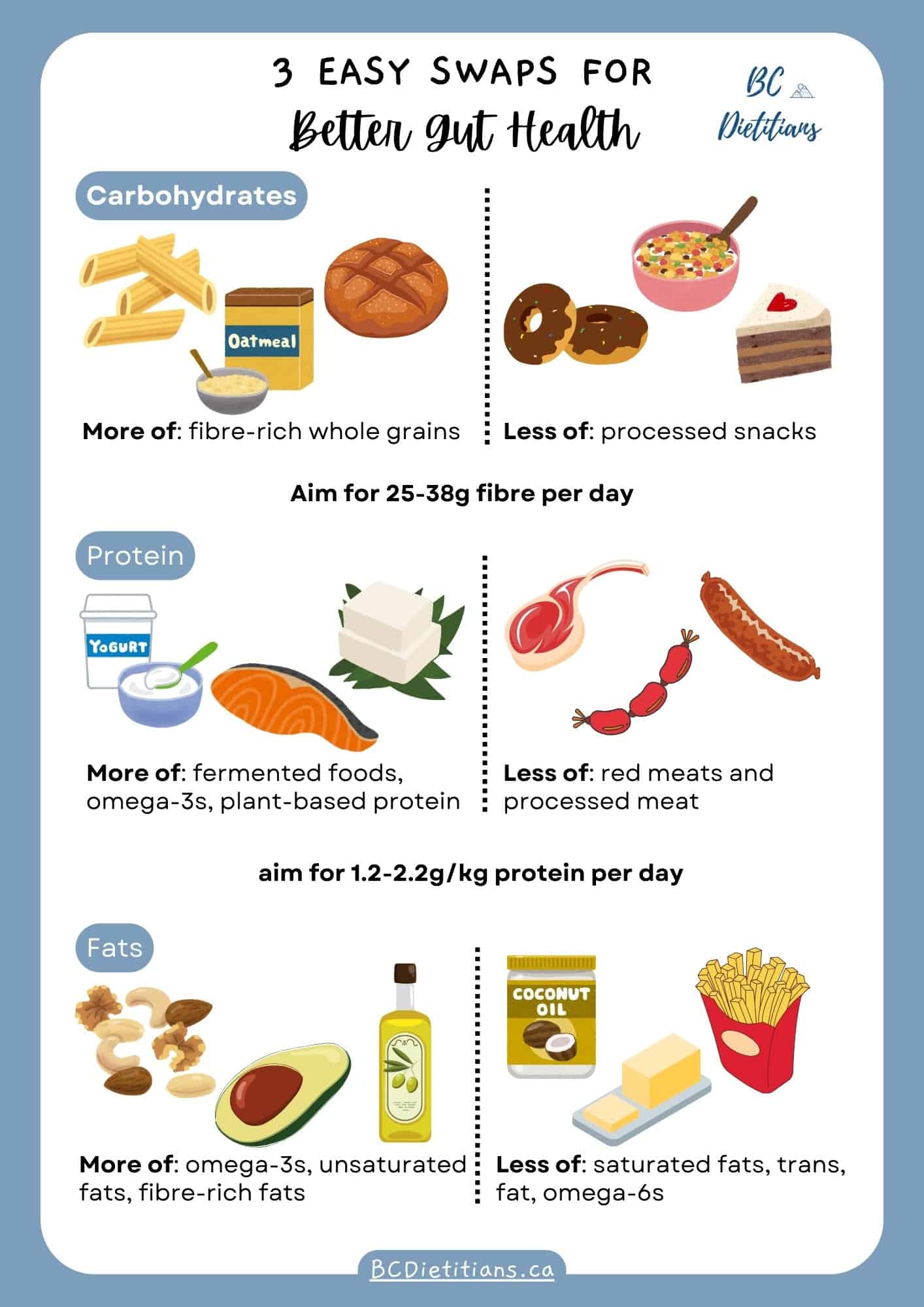
Image from bcdietitians.ca.
Alcohol and Digestion: What the Research Says
Alcohol’s relationship with gut health is dose-dependent. Heavy or chronic alcohol consumption is well-documented to disrupt the gut microbiome, increase intestinal permeability, and promote the growth of harmful bacterial species while reducing beneficial ones. It can also impair the gut lining’s ability to function as a barrier, which allows bacterial endotoxins to enter the bloodstream and trigger systemic inflammation.
Moderate consumption is more nuanced. Some research suggests that certain polyphenol-rich alcoholic beverages — red wine being the most studied — may have a modest positive effect on microbiome diversity at low intake levels, likely due to their polyphenol content rather than the alcohol itself. That said, the benefits of those same polyphenols can be obtained without alcohol from grapes, berries, and other plant foods. The context of overall diet and lifestyle matters here more than any single beverage choice.
Diet Approaches That Support Gut Health
No single dietary framework has a monopoly on gut health. Several popular eating patterns have been studied specifically for their effects on the microbiome and digestive function, each with distinct mechanisms, strengths, and appropriate use cases.
The right approach depends largely on where someone is starting from — whether they’re dealing with a diagnosed digestive condition, general gut discomfort, or simply trying to optimize a microbiome that’s already functioning reasonably well.
Diet Approaches at a Glance
Diet Approach Best For Key Mechanism Low-FODMAP IBS, SIBO, digestive sensitivity Reduces fermentable carbs that cause gas and bloating Anti-inflammatory Chronic gut inflammation, general optimization Reduces inflammatory compounds, increases antioxidants Plant-forward Microbiome diversity, long-term gut resilience High fiber and polyphenol intake feeds diverse microbiota Omnivorous (balanced) General health with flexibility Depends on food quality and plant food inclusion
It’s worth noting that these approaches are not mutually exclusive. Someone following an anti-inflammatory diet can also eat plant-forward. A low-FODMAP protocol is typically a short-term diagnostic tool, not a permanent lifestyle. Understanding what each approach is actually designed to do makes it easier to apply them strategically.

Image from sauercrowd.nl.
The Low-FODMAP Diet for Digestive Sensitivity
The Low-FODMAP diet was developed by researchers at Monash University specifically to help manage symptoms of irritable bowel syndrome (IBS). FODMAP stands for Fermentable Oligosaccharides, Disaccharides, Monosaccharides, and Polyols — a group of short-chain carbohydrates that are poorly absorbed in the small intestine and rapidly fermented by gut bacteria, producing gas and triggering symptoms like bloating, cramping, and altered bowel habits in sensitive individuals. The protocol involves a strict elimination phase followed by a structured reintroduction phase to identify personal triggers, and is most effective when guided by a registered dietitian.
Anti-Inflammatory Eating for a Healthier Microbiome
An anti-inflammatory dietary pattern prioritizes foods that reduce oxidative stress and dampen chronic low-grade inflammation — two factors closely linked to gut microbiome disruption. This means emphasizing fatty fish like wild salmon and sardines for their omega-3 content, extra virgin olive oil, leafy greens, berries, turmeric, and legumes, while minimizing refined carbohydrates, processed meats, and industrial seed oils. Unlike Low-FODMAP, which is primarily symptom-management, anti-inflammatory eating is a long-term strategy for maintaining a resilient gut environment.
Plant-Forward vs. Omnivorous Diets: Which Is Better for Your Gut?
Research consistently shows that higher plant food intake is associated with greater microbiome diversity — largely because plants deliver the fiber and polyphenols that feed the widest range of bacterial species. However, an omnivorous diet that includes high-quality animal proteins alongside abundant plant foods can also support a healthy gut. The evidence doesn’t suggest that eliminating animal products is necessary for gut health — what matters most is how much of the diet is made up of diverse, fiber-rich plant foods, regardless of whether animal foods are also present.
No Single Gut Diet Works for Everyone
One of the most important — and frequently overlooked — truths about gut health nutrition is that the “best” diet is largely individual. What produces dramatic improvements in one person’s digestion may do nothing, or even cause discomfort, in another.
This isn’t a failure of nutrition science. It’s a reflection of how genuinely complex and personalized the microbiome is. Two people eating identical diets can produce entirely different microbial responses, which is why rigid dietary prescriptions rarely work as universal solutions.
Why Your Microbiome Is Unique to You
Every person’s microbiome is shaped by a constellation of factors that began at birth — including delivery method, early feeding history, childhood antibiotic exposure, geographic environment, and long-term dietary patterns. By adulthood, your microbial fingerprint is distinct. This means that the same food can be fermented differently, produce different amounts of SCFAs, and trigger different immune responses depending on who’s eating it. Personalized nutrition approaches, including microbiome testing, are an emerging area of research aimed at making dietary recommendations more precise — though the field is still maturing.
How to Use Your Own Symptoms as a Guide
In the absence of clinical testing, your own body gives you significant real-time data. Keeping a simple food and symptom journal — noting what you ate, when you ate it, and how you felt in the hours afterward — can reveal patterns that are otherwise easy to miss. Bloating after high-lactose foods, fatigue after heavy refined carbohydrate meals, or improved energy after adding fermented foods are all meaningful signals. This kind of self-monitoring isn’t a replacement for professional guidance, but it’s a practical starting point for identifying what your specific gut responds to best.
Avoiding Diet Dogma That Can Backfire
The wellness space is full of competing dietary ideologies, each claiming to be the definitive answer for gut health. Carnivore advocates argue that plant fiber is inflammatory. Raw vegans insist that cooked food destroys beneficial enzymes. Clean eating communities create long lists of forbidden ingredients. The problem with all of these frameworks is that they prioritize ideology over individual biology — and for gut health specifically, that can lead people further away from feeling well.
Eliminating entire food groups without a clinical reason to do so can actually reduce microbiome diversity. Cutting out legumes, for example, removes one of the richest sources of prebiotic fiber available. Avoiding all fermented dairy eliminates a well-researched source of beneficial bacteria. When dietary rules become more restrictive than the evidence warrants, the microbiome often pays the price.
The most research-supported gut health dietary pattern isn’t a named protocol — it’s a consistent, varied, plant-rich diet that includes fermented foods, limits ultra-processed products, and is flexible enough to be maintained long-term. Rigidity and stress around eating are themselves disruptive to digestion, which brings us to an equally important factor…
How You Eat Matters as Much as What You Eat
Most gut health conversations focus exclusively on food composition — which foods to add, which to remove, which macronutrient ratio to target. But the physiological context in which you eat has a direct and measurable impact on how well your digestive system functions. Digestion is not just a mechanical process. It is a neurologically regulated system that responds in real time to your environment, stress levels, and eating behaviors.

Image from mybioma.com.
The autonomic nervous system controls digestive function through two opposing states: the parasympathetic state — often called “rest and digest” — and the sympathetic state, associated with stress responses. When you eat in a calm, unhurried state, the body allocates blood flow and enzyme production toward digestion. When you eat while stressed, rushed, or distracted, that same system is effectively working against you.
Meal Timing and Gut Motility
Gut motility — the rhythmic muscular contractions that move food through the digestive tract — follows a circadian pattern. The digestive system is most active during daylight hours, which aligns with when most people naturally feel hungry. Eating very late at night or skipping meals and consuming large amounts of food infrequently can disrupt this rhythm, slowing motility and altering the composition of gut bacteria. While intermittent fasting has shown some potential benefits for gut health by allowing periods of microbial rest, the timing and size of meals relative to your body’s natural rhythms still matters. Consistent meal timing — eating at roughly similar times each day — supports more predictable digestive function and microbial stability.
Stress, the Gut-Brain Axis, and Digestion
The gut and brain are in constant bidirectional communication through the gut-brain axis — a network involving the vagus nerve, enteric nervous system, and microbial metabolites. Chronic psychological stress alters gut motility, increases intestinal permeability, and shifts the composition of the microbiome toward less favorable bacterial profiles. This is not a minor effect. Research has shown that prolonged stress can reduce populations of beneficial Lactobacillus and Bifidobacterium species — the same bacteria that fermented foods and fiber work to support. Managing stress through consistent sleep, physical activity, and intentional downtime is not separate from gut health — it is part of the same system.
Eating Slowly and Its Direct Impact on Digestion
Chewing is the first and most underestimated step in the digestive process. Breaking food down mechanically in the mouth increases the surface area available to digestive enzymes, makes nutrient absorption more efficient, and reduces the fermentation burden on the colon. Eating quickly and swallowing large food particles forces the lower digestive tract to compensate — a common driver of bloating and gas that has nothing to do with which foods you’re eating.
Slowing down also activates the cephalic phase of digestion — the anticipatory release of saliva, stomach acid, and digestive enzymes triggered by the sight, smell, and taste of food. When meals are rushed, this phase is cut short and digestive efficiency drops before the food even reaches the stomach. Sitting down, removing screens, and taking a few slow breaths before eating are not just mindfulness practices — they are functional digestive strategies supported by how the enteric nervous system actually works.
Build Your Plate for a Healthier Gut Every Day
Building a gut-supportive diet doesn’t require a complete dietary overhaul or a list of superfoods. It comes down to consistent, practical habits: aim for a wide variety of plant foods across the week, include at least one fermented food daily, minimize ultra-processed products and excess added sugar, stay hydrated to support motility, and eat in an environment that allows your nervous system to actually digest what you consume. Small, sustained changes consistently outperform dramatic short-term protocols — and they’re far more likely to produce a microbiome that’s resilient, diverse, and working in your favor for the long term.

Image from www.eatingwell.com.
Frequently Asked Questions
Below are answers to some of the most common questions about using food and diet to improve gut health, based on current research and nutritional evidence.
What are the best foods to eat daily for gut health?
The best daily foods for gut health include a mix of high-fiber plants, fermented foods, and polyphenol-rich ingredients. Practically, this looks like incorporating vegetables, legumes, or whole grains at most meals; including at least one serving of a fermented food like yogurt, kefir, or sauerkraut; and regularly eating polyphenol sources like berries, extra virgin olive oil, and green tea. No single food is essential — diversity and consistency across the week matter more than any one ingredient.
Can improving your diet repair a damaged gut microbiome?
Yes, the gut microbiome is remarkably responsive to dietary change. The composition of gut bacteria can begin to shift within days of changing what you eat — though meaningful, lasting restoration of diversity typically takes weeks to months of consistent dietary improvement. If gut damage stems from prolonged antibiotic use, chronic illness, or significant dietary neglect, recovery is still achievable through diet, though working with a healthcare provider or registered dietitian is recommended to ensure the approach is appropriate for the underlying cause.
How long does it take for diet changes to improve gut health?
Short-term shifts in the microbiome can occur within 48 to 72 hours of dietary changes — particularly when moving from a low-fiber to a high-fiber diet. However, these early changes are not always stable. Sustained improvement in microbial diversity and gut lining integrity generally takes four to eight weeks of consistent dietary effort. Symptom improvement, such as reduced bloating or more regular bowel movements, is often noticed sooner — sometimes within one to two weeks — but this does not necessarily mean the underlying microbiome has been fully restored.
Are probiotic supplements as effective as fermented foods?
Probiotic supplements and fermented foods both deliver live microorganisms to the gut, but they work somewhat differently. Fermented foods tend to deliver a broader range of bacterial strains alongside prebiotic fiber, polyphenols, and other bioactive compounds that support the gut environment holistically. Probiotic supplements deliver specific, concentrated strains that may be beneficial for targeted clinical applications — such as managing antibiotic-associated diarrhea or supporting recovery from specific digestive conditions.
For general gut health maintenance in otherwise healthy individuals, fermented whole foods are generally the preferred option. Key distinctions include:
- Fermented foods provide live cultures plus fiber, enzymes, and polyphenols — a more complete gut-health package
- Probiotic supplements deliver isolated strains at high doses, which may be beneficial for specific conditions but are not well-studied for general microbiome optimization
- Strain specificity matters in supplements — not all probiotics are interchangeable, and the research supporting one strain does not apply to others
- Quality varies widely in the supplement industry; third-party tested products with documented strain viability through expiration are worth prioritizing if supplementing
- Fermented foods are also prebiotic in some cases — kimchi and sauerkraut, for example, deliver both fiber and live bacteria simultaneously
If you’re considering a probiotic supplement for a specific health concern, consulting with a gastroenterologist or dietitian will give you the best chance of choosing a strain with evidence behind it for your situation. Self-selecting a probiotic off a pharmacy shelf without knowing your specific microbial needs is largely a guessing game.
The bottom line is that fermented foods should be the default for most people, with supplements used strategically when there’s a specific clinical rationale — not as a replacement for the dietary work of building a microbiome-supportive eating pattern.
What foods should you avoid if you have a sensitive gut?
Gut sensitivity varies significantly between individuals, which means there’s no universal avoid list that applies to everyone. That said, the foods most commonly associated with digestive discomfort in sensitive individuals include high-FODMAP foods like onions, garlic, wheat, and certain legumes; dairy products containing lactose; highly processed foods with emulsifiers and artificial sweeteners; carbonated beverages; very spicy foods; and alcohol. These foods don’t cause problems for everyone — the key is identifying your personal triggers through an elimination and reintroduction process rather than cutting everything out preemptively.
Working with a registered dietitian is particularly valuable for those with ongoing gut sensitivity, as blanket elimination diets can inadvertently reduce fiber intake and microbiome diversity — making long-term gut health worse even if short-term symptoms improve. The goal is always to eat as broadly as your gut can comfortably tolerate, not to reduce the diet to the smallest possible set of “safe” foods.
It’s also worth noting that what feels like a food sensitivity is sometimes a symptom of how food is being eaten rather than what is being eaten. Large portion sizes, eating under stress, insufficient chewing, and inadequate hydration can all make otherwise well-tolerated foods feel problematic. Before removing a food from your diet entirely, it’s worth assessing whether any of these contextual factors might be contributing to the discomfort you’re experiencing.
For More Support
Browse our gut health archives, or explore these resources for additional details on optimizing the various aspects of gut health:
- Gut Health Basics – Offers a foundational understanding of digestion and microbiome (start here).
- Gut Healing Tips & Protocols – Information on dealing with gut health challenges and building a thriving microbiome.
- Supplements & Microbiome Support – When and how to consider probiotics/prebiotics.
It should come as no surprise that the food you eat is one of the most important factors for good gut health. By following the gut-healthy eating tips and guidelines above, you can help your gut stay healthy, balanced, and thriving.
Featured Image from www.uhhospitals.org.


